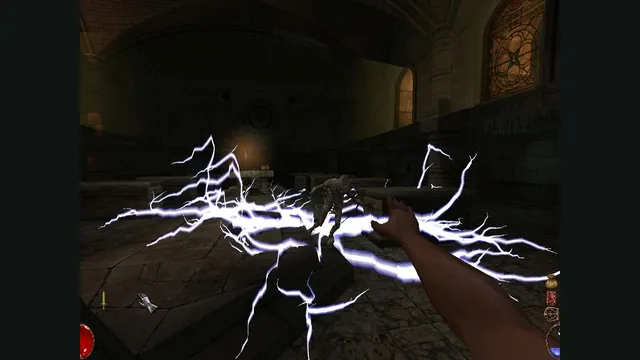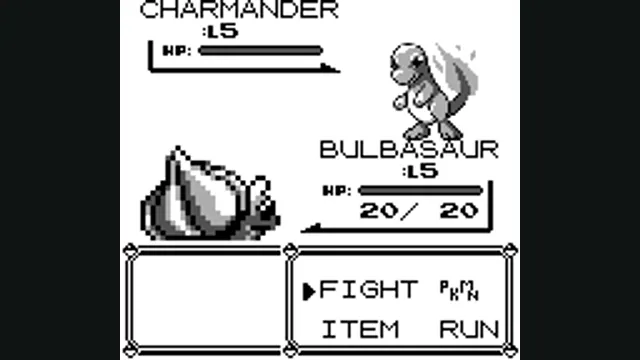
Pokémon Red/Blue battle reference for the generation-I portion of Gen1Recomp; not a generation-II/III or project capture.
Image credits ↗A LÖVE engine recreation that imports supported Generation I and II cartridge data.
 SetupYour game files required
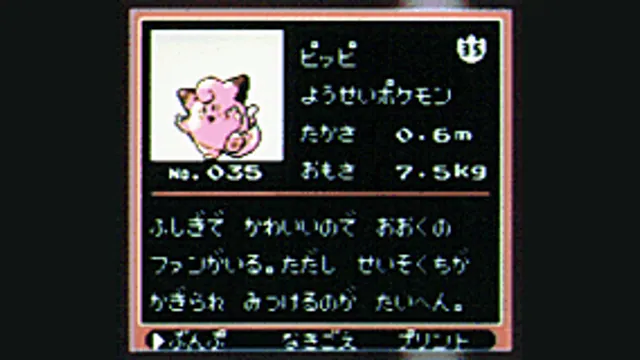
Original Japanese Pokémon Gold / Silver Pokédex screen from Nintendo’s publisher site, used as a source-game reference for Gen2Recomped.
Pokémon imagery © Nintendo, Creatures and GAME FREAK. Publisher screenshot from the Japanese Pokémon Gold / Silver site.
Source & attribution ↗View image ↗A LÖVE engine recreation that imports supported Generation I and II cartridge data. This is handwritten Lua recreation, not static recompilation despite its name. Upstream reports antivirus alerts; this catalog has not validated those files or the claimed false-positive explanation.
Gen2Recomped recreates Gold, Silver and Crystal using a hand-written Lua engine. Its documented additions include Johto and Kanto, a day/night cycle, breeding and the Day-Care, the Pokégear, shiny Pokémon and held items. Those systems give the journey more to manage than simply moving between battles: time, team-building and the items carried by your Pokémon become part of planning.
Red, Blue and Yellow remain available through the upstream Gen1Recomp foundation. Despite the name, this project is not a static translation of the original machine code and does not emulate the Game Boy. It reads an owned ROM to build the data used by its own engine.
The importer checks canonical US ROM hashes before creating local data. Gold and Silver have their own accepted images, while Crystal supports the listed revision 0 and revision 1 dumps. A different region or modified ROM is not interchangeable with those inputs. The desktop app accepts a selected file or a file dropped onto its window.
Each game keeps separate imported data and saves, allowing several versions to sit side by side. The original ROM is not copied into the generated cache, and later launches use that cache without repeating the import. Preserve the relevant user-data directory when updating or moving a continuing game.
Keyboard and controller inputs map to the original directional pad, A, B, Start and Select buttons. OPTIONS → CONTROLS provides rebinding. The engine also exposes zoom, color and presentation effects, alongside quick-save and quick-load shortcuts. Its performance presets adjust presentation work while preserving fixed-step game logic.
The Generation I games offer faithful and modern_clean rulesets; those choices should not be confused with Gold and Silver’s separate Generation II rules. Decide which behavior you want before assuming every version follows one universal set of changes.
The release table includes desktop, mobile and homebrew-device packages, each with its own installation route. A retail Xbox cannot install the Developer Mode package, and console imports use scanned folders rather than a desktop file picker. On Windows, the ordinary ZIP offers the same game without the separate certificate-installation process required by the MSIX package.
Canonical US Gold, Silver, Crystal Rev 0/1, Red, Blue or Yellow ROMs, matched by SHA-1 during import. The packages contain neither ROMs nor extracted game data.
Creator-reported · Project guideChoose a platform package, open it and select or drop a supported .gb/.gbc file. The importer builds a private cache for later launches.
Creator-reported · Project guideDesktop, Android and iOS packages are documented, with separate handheld/console workflows. Availability differs by release asset.
Creator-reported · Project guideKeyboard and controller mappings are configurable in Options → Controls.
Creator-reported · Project guideF1 saves and F2 loads; imported data is cached separately from the original ROM.
Creator-reported · Project guideThis is handwritten Lua recreation, not static recompilation despite its name. Upstream reports antivirus alerts; this catalog has not validated those files or the claimed false-positive explanation.
Creator-reported · Project guidePokémon Red/Blue battle reference for the generation-I portion of Gen1Recomp; not a generation-II/III or project capture.
Image credits ↗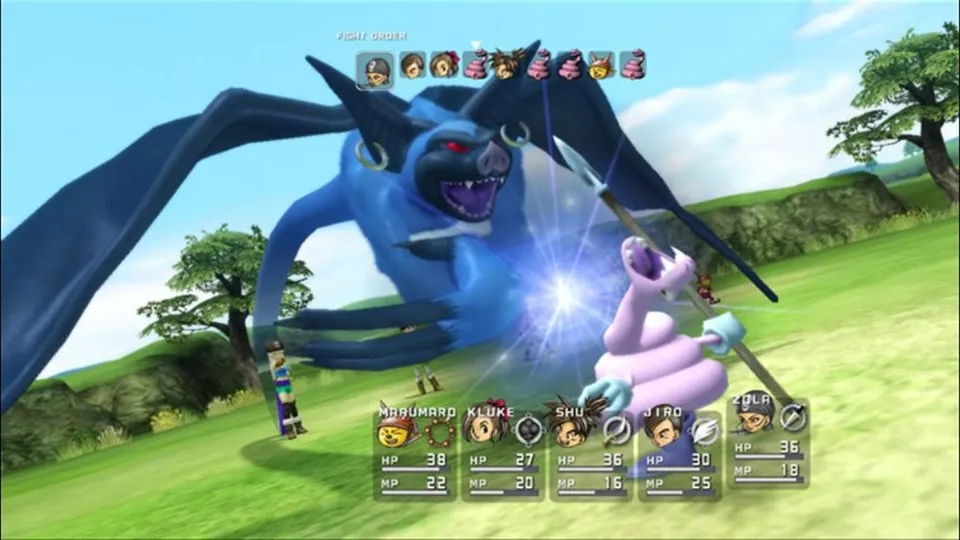
Original Blue Dragon battle from the Xbox publisher gallery, used as a source-game reference for re:Blue.
Image credits ↗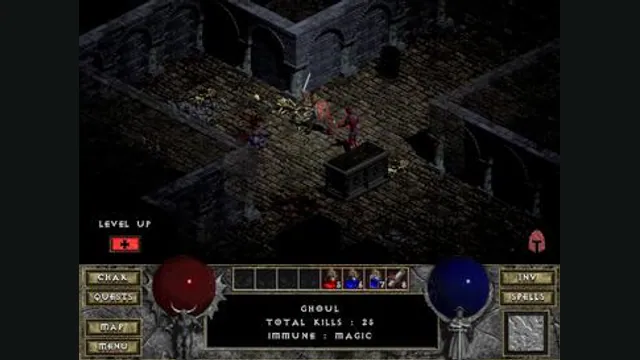
Diablo gameplay reference; not a browser or DevilutionX capture, and not a Hellfire scene.
Image credits ↗A maintained Diablo and Hellfire port with a shareware option.
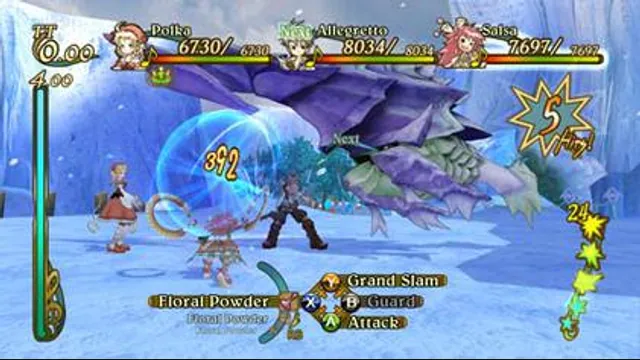
Eternal Sonata gameplay reference; not a capture of the linked project.
Image credits ↗